High Ticket vs. Low Ticket: 10 Top Tips for E-commerce Success in 2026
High Ticket vs. Low Ticket: 10 Top Tips for E-commerce Success in 2026
Welcome to the future of e-commerce! It's 2026, and the online marketplace is more competitive than ever. One of the most critical decisions you'll make as an online seller is choosing between focusing on high-ticket or low-ticket products. Both strategies have their advantages and disadvantages. This guide provides 10 essential tips to help you navigate this choice and optimize your e-commerce business for success.
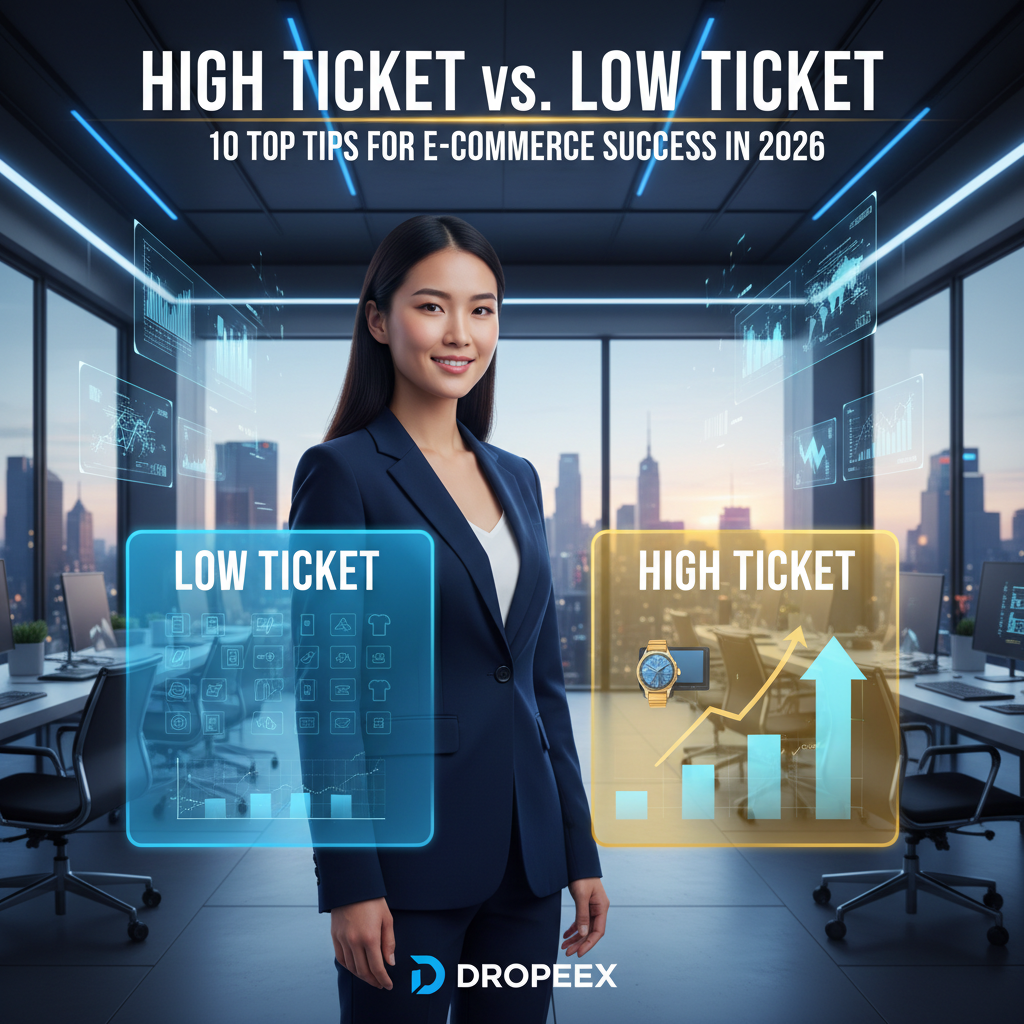
What are High-Ticket and Low-Ticket Products?
Before we dive into the tips, let's define our terms:
- High-Ticket Products: These are items with a higher price point, typically requiring more investment in marketing and sales. Think luxury goods, specialized equipment, high-end electronics, or premium services. Profit margins are often larger per sale, but sales volume is lower.
- Low-Ticket Products: These are items with a lower price point, usually sold in higher volumes. Think everyday essentials, inexpensive accessories, digital downloads, or impulse buys. Profit margins are smaller per sale, but the potential for high sales volume is much greater.
10 Top Tips for Choosing the Right Strategy:
-
Know Your Niche Inside and Out: Whether you're selling high-ticket or low-ticket items, understanding your niche is paramount. Research your target audience, their needs, pain points, and buying habits. This knowledge will inform your product selection, marketing strategies, and overall business approach.
-
Assess Your Capital and Risk Tolerance: High-ticket products generally require more initial investment in inventory and marketing. Consider your financial resources and your willingness to take risks. Low-ticket products may have lower upfront costs but require a focus on efficient inventory management and high-volume sales.
-
Evaluate Your Marketing Expertise: Selling high-ticket items often requires sophisticated marketing strategies, including targeted advertising, content marketing, and personalized sales approaches. Do you have the skills or resources to implement these strategies? Low-ticket items often rely on broader marketing campaigns and promotions to drive volume.
-
Consider Your Customer Service Capabilities: High-ticket customers typically expect a higher level of customer service. Are you prepared to provide personalized support, address inquiries promptly, and handle potential issues effectively? Low-ticket sales often involve less direct customer interaction.
-
Analyze Your Competition: Research your competitors in both the high-ticket and low-ticket spaces. What are they selling? How are they marketing their products? What are their price points? Identifying opportunities and differentiating yourself from the competition is crucial.
-
Calculate Your Profit Margins Carefully: Don't just focus on revenue; focus on profit. Calculate your profit margins for both high-ticket and low-ticket products, taking into account all costs, including inventory, marketing, shipping, and customer service.
-
Explore Dropshipping Opportunities: Dropshipping can be a viable option for both high-ticket and low-ticket products. It allows you to start selling without investing heavily in inventory. However, research your suppliers carefully and ensure they can provide reliable service and quality products.
-
Leverage Automation Tools: In 2026, automation is key to efficiency. Tools like ZeeDrop Crosslister can significantly streamline your product listing process. Whether you're listing numerous low-ticket items or a curated selection of high-ticket goods, efficiently managing your product listings across multiple platforms is crucial. ZeeDrop Crosslister helps you list products across multiple marketplaces in seconds, saving you valuable time.
-
Build a Strong Brand Reputation: Regardless of whether you're selling high-ticket or low-ticket items, building a strong brand reputation is essential for long-term success. Focus on providing excellent products, exceptional customer service, and consistent branding across all channels.
-
Adapt and Iterate: The e-commerce landscape is constantly evolving. Be prepared to adapt your strategies and iterate based on data and customer feedback. Continuously analyze your performance, experiment with new approaches, and stay up-to-date on the latest trends.
The Hybrid Approach
Don't feel limited to choosing exclusively between high-ticket and low-ticket products. A hybrid approach can be effective, offering a mix of both to diversify your revenue streams and cater to a wider range of customers. For example, you could sell a high-ticket core product and offer related low-ticket accessories or add-ons.
Final Thoughts
Choosing between high-ticket and low-ticket products is a strategic decision that requires careful consideration. By following these 10 tips, you can make an informed choice that aligns with your business goals and maximizes your chances of success in the competitive e-commerce landscape of 2026. Good luck!
FAQ: High Ticket vs. Low Ticket
Frequently Asked Questions: High Ticket vs. Low Ticket E-commerce
- What is the main difference between high-ticket and low-ticket products?
- High-ticket products have a higher price point and typically lower sales volume, while low-ticket products have a lower price point and higher sales volume.
- Which is better, high-ticket or low-ticket e-commerce?
- Neither is inherently better. The best choice depends on your individual circumstances, including your capital, risk tolerance, marketing expertise, and target audience.
- Is dropshipping suitable for high-ticket products?
- Yes, dropshipping can be suitable for high-ticket products, but it's crucial to carefully vet your suppliers to ensure they can provide reliable service and quality products.
- How important is customer service for high-ticket products?
- Customer service is extremely important for high-ticket products. Customers expect a higher level of personalized support and attention.
- Can I sell both high-ticket and low-ticket products?
- Yes, a hybrid approach can be effective, allowing you to diversify your revenue streams and cater to a wider range of customers.
- What are some examples of high-ticket products?
- Examples include luxury goods, specialized equipment, high-end electronics, and premium services.
- What are some examples of low-ticket products?
- Examples include everyday essentials, inexpensive accessories, digital downloads, and impulse buys.
- How can automation tools help with selling high-ticket or low-ticket items?
- Automation tools, like ZeeDrop Crosslister, can streamline product listing, inventory management, and order fulfillment, saving you time and improving efficiency.
- What is the key to building a strong brand reputation in e-commerce?
- The key is to provide excellent products, exceptional customer service, and consistent branding across all channels.
- How often should I adapt my e-commerce strategies?
- You should continuously analyze your performance, experiment with new approaches, and stay up-to-date on the latest trends to adapt your strategies regularly.
