You've got a supplier feed, a handful of products you're excited about, and two tabs open: one for Etsy, one for eBay. The instinct is to list on both at the same time, just to see what sticks. Three days later, you've got four half-finished listings on each platform, no sales, and a nagging feeling that you're doing this wrong.
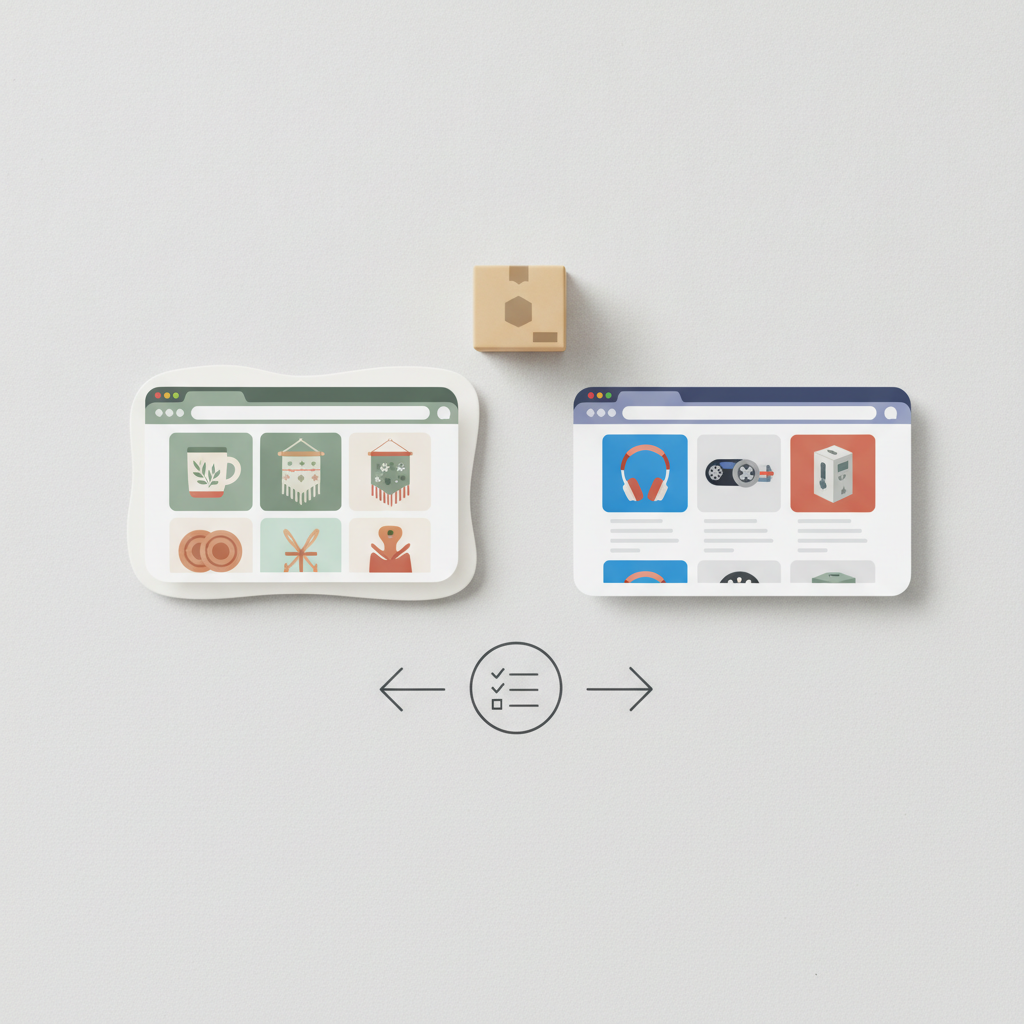
You're not doing it wrong. You're just trying to solve two problems at once when you only have the time and attention for one.
The beginner's dilemma: too many platforms, too little time
Nobody tells new sellers this clearly enough: listing a product well takes real time, even when the process is straightforward. Titles, categories, pricing, images, descriptions that don't sound like they were copy-pasted from a supplier page — it adds up. Do that work twice, for two different platforms with two different sets of rules and buyer expectations, and you're not moving faster. You're splitting a limited number of hours into smaller, less effective chunks.
This is the trap. Beginners assume that being on more marketplaces means more chances to sell. In practice, it usually means fewer finished, polished listings on either one. A dropshipper with 15 well-built listings on a single platform will typically outperform someone with 8 rushed listings scattered across two. The math isn't about platform choice yet — it's about focus.
So before comparing Etsy and eBay as businesses, it helps to accept the real starting constraint: you can only give one platform your full attention right now. The question isn't "which platform is better." It's "which one deserves my limited listing time first."
What actually differs for a dropshipper between Etsy and eBay
Etsy and eBay serve different buyer intents, and that matters more for a dropshipper than most feature lists suggest.
Etsy shoppers are generally browsing with a niche or handmade/curated mindset. They search for a specific style, occasion, or aesthetic, and they respond to product listings that feel personal and specific rather than generic. eBay shoppers, by contrast, are often searching with a broader, more transactional mindset — looking for a specific item, brand, or spec, comparing listings side by side, and making faster decisions based on price, condition, and seller reliability.
For a dropshipper, this difference shows up in how well your supplier's product data fits the platform. If your product catalog leans toward broad, recognizable items — electronics accessories, tools, general home goods, anything a buyer would type into a direct search — that data tends to map more naturally onto eBay's search-driven marketplace. If your catalog leans toward niche, styled, or story-driven products, Etsy's audience may respond better, but it also usually demands more listing effort per item to hit that "curated" feel Etsy buyers expect.
Neither is inherently the better business decision. What matters is being honest about what your current product data actually looks like, and which platform's buyer behavior that data is already suited to — without extra rewriting, restyling, or repositioning work you don't have time for yet.
Why the listing process itself is the real early bottleneck
Here's the part that gets overlooked: even after you pick a platform, the workload doesn't disappear. Whether you choose Etsy or eBay, you still have to take raw supplier data and turn it into listings that read well, price correctly, and don't fall into duplicate or messy formatting. That's the actual bottleneck for almost every beginner dropshipper — not platform selection, but the grind of listing itself.
This is where a lot of new sellers lose momentum. They pick a platform, feel good about the decision, and then get stuck doing the same manual, repetitive listing work they were dreading in the first place. Copying descriptions, adjusting titles by hand, reformatting images, checking categories one at a time. It's slow, and it's the kind of work that's easy to get wrong when you're moving fast or juggling too many product variants.
If you're leaning toward eBay as your starting platform — because your product catalog fits its search-driven audience, or because you're more comfortable with a broad marketplace than a niche one — this is exactly the stage where a structured workflow matters more than the platform debate ever did. Dropeex is built around this specific gap: a non-API eBay lister that takes the manual weight out of getting listings live, so you're not stuck rebuilding the same steps for every single product. It doesn't decide Etsy versus eBay for you, but once eBay is the platform you're focusing on, it's designed to make that focus actually productive instead of exhausting.
Choosing a first platform without overthinking it
At some point, you have to stop comparing and start listing. A useful way to make that call without spiraling: look at what your supplier data already looks like, and be honest about whether it needs heavy styling work (leans Etsy) or whether it's already close to how buyers search directly for items (leans eBay). Then commit to that platform for a defined stretch of time — long enough to actually build out a real catalog of listings, not just a test batch.
The good news is that this decision isn't permanent, and it doesn't need to feel that heavy. Starting on eBay doesn't lock you out of Etsy later, and starting on Etsy doesn't mean you can never test eBay. What tends to go wrong isn't picking the "wrong" platform first — it's spending so much energy on the decision itself that the listing work never gets the structure it needs. A beginner who builds 20 solid listings on eBay this month has more real data about their dropshipping business than someone who's still debating platforms two months in.
If eBay ends up being your answer, even as a working starting point rather than a final one, the practical next step is making sure your listing process can keep up with your product list — not the other way around. That's the specific problem Dropeex is built to solve: turning supplier product data into eBay listings through a browser-based workflow, without needing API access or a heavier tech setup than a beginner seller actually needs. You can read more seller-focused breakdowns like this one on the Dropeex blog as you figure out your own workflow.
Start now and work faster — pick your first platform, and let the listing process itself stop being the thing that slows you down.
What is a non-API eBay lister?
It's a listing workflow that lets sellers get products onto eBay through a browser-based process, without needing to build or connect to eBay's official API. It's typically aimed at sellers who want a simpler, more direct way to list without extra technical setup.
Should I list on Etsy and eBay at the same time as a beginner?
Trying to run both from day one usually means neither gets your full attention. Most beginners get better early results by focusing on one platform, building out real listings there, and expanding later once that process feels manageable.
How do I know if my products fit eBay better than Etsy?
Look at your supplier data as it already exists. If your products are broad, recognizable items buyers would search for directly by name or spec, that tends to fit eBay's search-driven audience without needing heavy restyling.
